
When in Doubt, Self-Publish It
why you should write the book you believe in

Welcome friends! If you’re new to my Substack, you’ll find a smorgasbord of content here: My poetry, theology, “day in the life” rundowns of life as a homeschooling mother/writer, and pieces about the nitty-gritty of writing. I have four traditionally published books (one was an ECPA bestseller) but the majority of my work is self-published.
All my Substack content is free at the moment. My family and team are supported through the sales of our self-published resources! So if this post is helpful to you, I’d love it if you perused our shop and found something to take home. We launched a new collection on March 12!
My first book was a compilation of blog posts on sexuality, erotica addiction, and biblical sexual ethics. I paid someone $400 to design the cover and interior, turned it into an ebook, and sold it on Gumroad for $10. Thanks to the web design skill of a childhood friend (and eventual employee), the ebook was listed on my website for sale. The Sex Talk You Never Had (formerly called Christian Cosmo) started my self publishing journey.
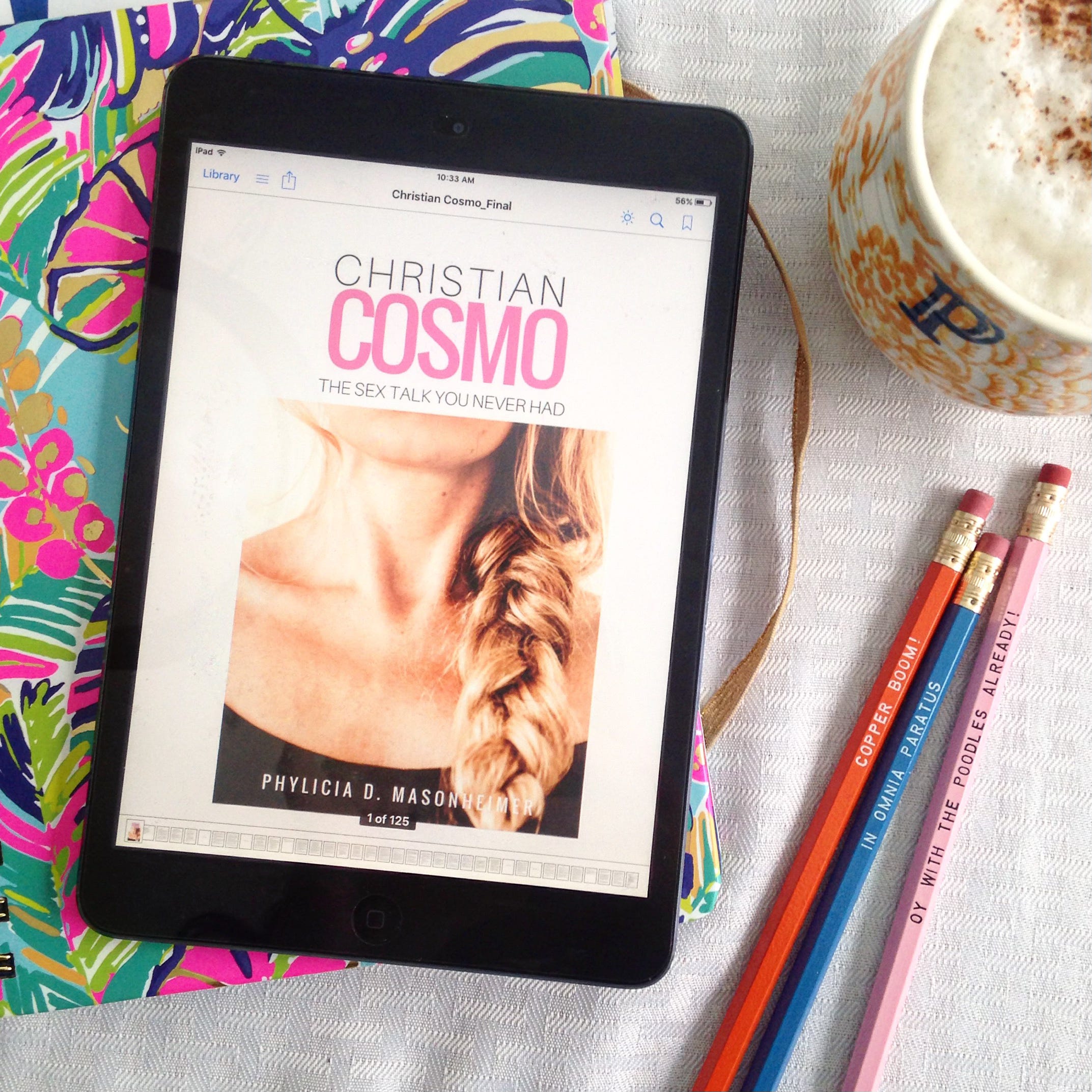
It never crossed my mind to pitch Sex Talk to a publisher. I didn’t know much about publishing, but I did know this: I wouldn’t wait on the decision of a sales committee to write what God had laid on my heart. I launched Sex Talk like spaghetti on a wall, unsure if it would sell. It did — and still does! Even though she’s undergone a redesign, title change, and interior edit over the years, this little book has sold more than 1,752 ebooks and approximately 4,000 in the print edition, which came later.
Before I get too far into this article, I want to be transparent: I consistently used social media to teach and share about my work. I started when Instagram was new, just sharing pictures and short devotions. Eventually I added a weekly theology Q/A, deep dives on specific topics, and when “reels” arrived, teaching videos related to my writing. Sex Talk launched in 2017, so reels didn’t exist yet. Instead, I was answering questions about biblical sexuality with a decrepit iPhone whose microphone didn’t work (I wore a gaming headset so people could hear me!) and writing books on a Dell laptop that died if it wasn’t plugged in. So yes: I self published, and still self publish, but I also used the avenues available to me — Facebook, Instagram, Pinterest — to organically market my books (I have used ads maybe twice in twelve years). I’ll circle back to that at the end.
After Five Book Contracts, Here’s Why I Still Self-Publish

Sex Talk’s success as an ebook led me to publish more ebooks. My husband was working outside the home at the time while I stayed home with our toddler and baby, so shipping anything was out of the question. But ebooks are cheap to make and cheap to buy, plus I already had boatloads of free content sitting on my blog waiting to be compiled. By reusing this content, editing the language, taking out links, and compiling it into readable form, I was able to create a succession of ebooks for my readers that supported my work without ads or much overhead. My costs were website and book design; I contracted a talented designer to do both. He templated a cover design that was used on all my books, both for cohesion and for saving costs/design time.
So when I signed my first traditional book contract, I already had multiple books and devotionals under my belt. The contract was an honor and that book continues to resonate with readers, but I quickly learned the marketing weight for a trade book and the marketing weight of my self published books was equal. I was doing the same amount of sharing, posting, designing launch plans, and podcasting I did for other books I wrote. The belief that a publisher magically carries the weight of sharing about a book — when they launch 20+ a year, minimum — is misinformed. Publishers are highly connected, of course, and can sometimes land interviews with large podcasts, set up book signings, and get deals with distributors. But the marketing that counts — personal connection to YOUR readers — happens through the author, traditional and self published alike.
Some of you will be discouraged to hear this, but I think it’s encouraging news. It means you don’t need to wait for an agent to pitch your idea to pursue it. It means, if God has lit a fire in your heart for a topic, you can simply write it and share about it. It’s difficult for me to write on this without unintentionally insulting the publishers who worked with me, but I have to be honest. As someone who has completed four traditional book contracts, is currently in a fifth, AND self publishes, the romance of a traditional book contract (or the trophy, as I think some authors see it) often gets in the way of a Christian writer’s mission: serving readers.
I’ll give you an example. I’m currently writing a bible study on spiritual gifts with a large Christian publisher. I’m excited about it; their team is incredible and I’m so grateful to work with them. But when we first talked about study topics I suggested a study on legalism. It’s a topic I’m passionate about and one women desperately need. It wasn’t a good fit for their publishing schedule, so I/they pivoted to spiritual gifts.
I could be crushed they didn’t like my pitch. I could decide that, because a publisher won’t look at it, it’s not worth doing. From what I see in Substack notes and IG threads, Christian authors think publishers are the final word on what books are viable. This isn’t true. The final word on what you should write is the Lord, if you are indeed writing for Him and not for man.
Anyone who works in Christian publishing will tell you: publishing is a business. The people working there are not big capitalist monsters; they are believers with really great hearts. But these companies have to pay for stuff. They have to pay the people who work there, they have to pay author’s advances, and they have to pay for printing. Now that I own a [microscopic] publishing house myself, I get it. The production of one book has multiple unseen costs. Publishers can take a few risks, but most of the time they need books to succeed, aka sell. Redirecting the Christian publishing ship is going to take years. Are you going to wait that long to write what God asked you to write about?
I wasn’t signed for a bible study on legalism. But legalism is a topic worth exploring; a subject that needs to be addressed. If it didn’t work for my publisher, that’s okay — I can still write it. I’ll be doing the same amount of marketing either way. I’ll be doing the same amount of writing. I’ll probably sell an equal number of books (one agent told me 90% of contracted books sell a max of 2,000 copies. You could do that through your own website!). If it’s all the same amount of effort, and I really believe in the subject, why not write the book?
My Self-Publishing Process, Then and Now
When I started self publishing ebooks, my process was pretty simple. I began with content I already had. The process looked like:
compile related articles, captions, and devotionals
edit into streamlined chapters (usually in a Google doc)
get a reader / friend to edit and proof
pay for contracted formatting and cover design
upload the PDF to my website for sale (we use Woocommerce on a Wordpress site)
design a three month launch plan for sharing on social media/my blog/podcast
launch the ebook
This process (especially planning out how I’d share about the topic for three months leading to launch) worked — over and over again. Now, I didn’t make millions. I’m a nonfiction Christian writer; that wasn’t my goal. But I did make enough to cover the costs of my website and designer, and I was able to invest back in the ministry.
In 2020 we shifted to print resources, experimenting for the first time with physical shipping. Josh quit his operations manager job while I was pregnant with our third child. He came on to handle logistics and shipping that summer — we thought temporarily — and never left! (If you don’t have a spouse ready to quit and handle physical shipping, or you don’t want to do it yourself, I highly recommend Amazon KDP’s print-on-demand to start. I don’t love Amazon, but it’s a great option if you want physical copies of your books.) The revenue from our ebooks paid for the overhead of physical books and products. Slowly, thanks to Josh’s careful management of ministry finances and the skill of our small team, we were able to begin printing more and more physical books.
Now our process looks like:
I write books and studies in a Google doc
Document goes to our staff editor; I complete her edits
Document goes to format and design
Cover design approval by me and design team
Document is checked by our proofreader in print format
Final proof by me
Send to printer (we have two; one for perfect binding and one for spiral)
Meanwhile, market new products via email, social media, podcast
*This article did not go through edit or proof, which I’m sure comes through in the reading!
Share Your Book Authentically and Consistently
Self publishing does not require stockpiling copies of your books in a back closet. It does not require thousands of dollars upfront. But it does require belief in your work, commitment to your call, and willingness to share the message of your book regularly without shame. If your work adds value to your readers, they will happily pay $5-10 for an ebook to support you (many are already paying $5 a month for Substack articles!). They’ll be thrilled to grab a compilation of your best essays on Amazon KDP.
Readers who trust you, who feel connected to you, will happily support your work. Their trust is your greatest asset and should be treated with care. This is where social media1 / Substack / podcasts / video come in handy for authors and why I’ve never had qualms about using them to teach. What I’m writing in my books I’m also talking about online; if people trust my words online, they might eventually read the books.
“Marketing” is a yucky word to authors, so think of it as creating connection with your readers. If you call it “chasing algorithms” or “playing the game” you’ll hate it. If you’re tracking numbers, you’ll hate it. It can’t be about any of that. I stopped looking at social media analytics years ago; the only time I see them is in meetings when it’s necessary for a specific task. So when I use social media to share my books, I’m not vying for attention or setting out my wares; I’m connecting with the individual women who resonate with my work. I shared online for a decade for the joy of sharing. I didn’t have any metrics to meet. And by replying to reader emails, DMs, and comments over the years I’ve learned their struggles and questions about the Christian life. I’ve learned where my writing wasn’t clear and how to communicate better in the future. I’ve developed resources based on the feedback of my readers.
Until recently I shared about my work by creating a content schedule. I would follow the same schedule each day, sharing from a different angle or topic. You have to customize this to the platforms and style that works for you, but here’s an example:
Monday: ask anything on Instagram, quote from my book on FB
Tuesday: deep dive topic of the book
Wednesday: day in the life, show glimpses of the writing process
Thursday: new podcast episode related to chapter of the book
Friday: Friday favorites / follows, share other writers/creators in that niche
Sat/Sun: no social media
This schedule gave me boundaries for what to post. I’m no longer creating on social media but the time I spent there did not return void. My goal with socials was to push people to longer form content, like podcasts and books. Everything I created there was directed to a deeper resource.
I also created free resources to build my email list (you can see our current library here), then made sure the emails were personal; something truly relevant to my readers’ lives, not just another story about me. Each week I sit down with my assistant to go through replies. I read the emails sent to me and either reply myself, or Kayla replies with my wording.
Self publishing became 70% of what I and my team produce. I don’t feel any shame for sharing my books online because I offer as much as I can for free! I trust that the people who really value the free materials will eventually read my longer work. Ultimately, sharing my books is about connection with the people reading them. Their engagement with and feedback on my message helps me become a better writer. Better yet, it creates a community of likeminded Christian readers pressing on toward the cross.
Whatever the message God has given you, it doesn’t need the stamp of approval from a formal book contract to be worth pursuing. Share your message, write the book, listen to the Spirit’s leading, walk through the open doors, be patient — and see what God does with little faithful steps.
My Substack is currently free to all subscribers. If you wish to support my writing, please consider shopping the Every Woman a Theologian bookstore!
I recently left social media, but I spent a decade sharing and building trust there. Our social media coordinator now runs our bookstore pages and I reshare her work to my accounts.
Thanks for sharing encouraging words
This is soooo helpful and encouraging. God put it on my heart this winter to write a devotional for new moms and writing is already underway!